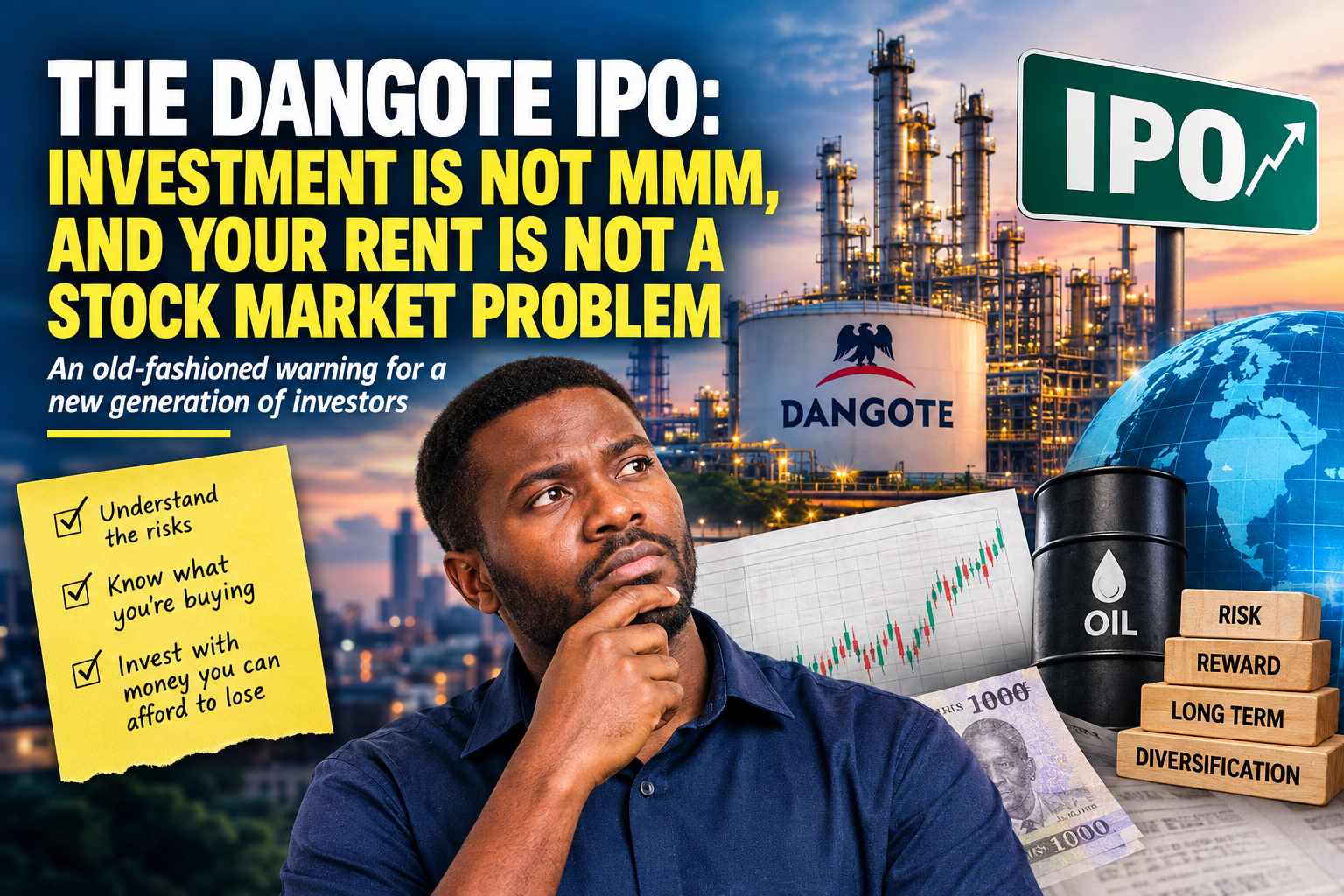
An old-fashioned warning for a new generation of investors
There is something rather strange happening in Nigeria at the moment. A great many people have suddenly discovered the stock market, and judging by the excitement on social media, some appear to believe that the Dangote Petroleum Refinery IPO is the latest financial miracle.
It is not! It is an Initial Public Offering, and that distinction matters.
The Dangote Petroleum Refinery and Petrochemicals public offer is for 4.1 billion ordinary shares at ₦525 per share, with a minimum subscription of ten shares, or ₦5,250. The offer opened on 14 September 2026 and is scheduled to close on 13 October 2026.
There is nothing inherently wrong with buying those shares. Seriously, there is nothing inherently foolish about believing in the refinery, and there is certainly nothing wrong with becoming a shareholder in a large Nigerian industrial enterprise if the investment suits one’s circumstances, objectives and tolerance for risk.
The problem only starts when an investment is sold to the public as though it were a shortcut to financial salvation.
YOUR RENT IS DUE NEXT MONTH, WHY ARE YOU BUYING STOCKS?
Consider a Nigerian man earning a little over ₦100,000 a month. He has a pregnant wife, two young children in school, rent approaching and household expenses that already exceed what his salary comfortably provides.
He asks how he can increase his income, and somebody tells him to buy stocks and bonds. One wonders what exactly he is expected to do with that advice.
The man did not ask how to build a retirement portfolio over twenty years, he asked how to meet immediate financial obligations. There is an important difference between building wealth and solving a cash-flow emergency.
Stocks can be useful for long-term wealth creation, bonds can play an important role in a portfolio, other investments can serve other purposes, but none of these instruments should be presented to a financially stretched person as though buying them will solve next month’s rent.
If your rent is due in thirty days, your children’s school fees are due in two weeks and your income does not cover your expenses, the first problem is not that you have failed to buy enough shares, the first problem is income and cash flow! Investment comes later.
This distinction is almost embarrassingly simple, yet it is frequently lost in the online investment conversation.
A person cannot eat a dividend that has not been declared, pay tomorrow’s school fees with a share certificate, or settle next month’s rent simply because somebody has told him that stocks are the road to financial freedom.
It is very important to stress that long-term investing has its place, but it is not a substitute for earning enough to meet immediate obligations.
THE STOCK MARKET IS NOT MMM
There is another misconception worth killing immediately, and it is that buying shares in a genuine public company is not the same thing as putting money into a Ponzi scheme.
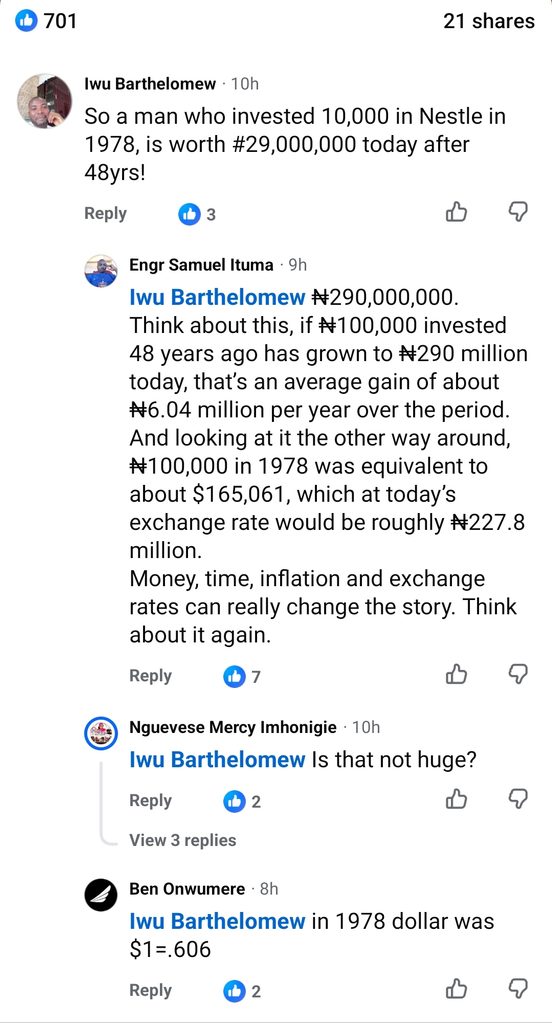
What do I mean?
When you buy ordinary shares, you are acquiring an ownership interest in a business. The Securities and Exchange Commission describes equities as instruments representing ownership in a company, while bonds represent debt owed by the issuer to the investor.
Your return is therefore not guaranteed… You must pay attention here!
Look, the company may prosper, it may still stagnate. The same way, the share price may rise, and it may also fall. Another important thing is that the company may pay dividends, or it may retain its earnings for expansion and other corporate purposes. If the company performs badly enough, shareholders can lose substantial amounts of money.
That is not a defect in the stock market, it is part of what it means to own a business.
An IPO is therefore not MMM with a different name. This distinction is fundamental and will save you from heartbreak.
With an ordinary share, you are not promised that somebody else will return your money with a predetermined profit. What you have simply done is that you have bought an interest in a company whose future is uncertain.
See, I am not in any way trying to talk you out of buying IPO and its brothers, I am only helping you see clearly, understand what you are doing, and have realistic expectations to avoid waking up tomorrow to call this market a scam. The stock market is not a scam. However, it is not for everyone, especially those who do not understand how it works and what to expect. Of course, it is just like every other business, you need to understand it, build your strategy, choose what suits you best, and know what to realistically expect.
WHAT HAPPENS TO THE MONEY?
There is another point that deserves attention. When a company raises money through an offer for subscription, the money raised is capital for the company. The Securities and Exchange Commission explains that a public offering enables a company to raise funds from the public, generally for purposes such as expanding its activities. However, that money does not become a magical pot from which shareholders immediately receive their fortunes.
You must understand that a company has employees to pay, suppliers to settle, taxes to meet, equipment to maintain, working capital to provide and expansion to finance. It may also have borrowing costs and other financial obligations.
If the business is profitable, the company may retain some of its earnings to grow the business rather than distribute everything to shareholders.
Only when dividends are properly declared, and subject to the rights attached to the shares and applicable legal and corporate requirements, do shareholders receive them.
There is another particularly important point about ordinary shareholders: they are not creditors.
In a liquidation, creditors generally stand ahead of ordinary shareholders. Shareholders are residual owners, they participate in whatever remains after the company’s obligations have been dealt with.
This is why the phrase, “I have invested in Dangote,” should never be mentally translated into, “Dangote owes me a return.” He does not. You only own a piece of the business, and as expected of a business owner, you share its fortunes and its risks.
THE DANGOTE NAME IS NOT A GUARANTEE
This brings us to one of the most uncomfortable questions…
Dangote is a remarkable Nigerian business name, the refinery is enormous and represents a major industrial undertaking, the company has also reported very strong recent financial performance, but the size and reputation of the businessman behind a company do not turn its shares into government securities.
The Securities and Exchange Commission itself advises investors to research the fundamentals, financial performance and market outlook of an investment, assess their risk tolerance and diversify rather than simply putting everything into one asset.
That is rather different from the tone one sometimes encounters online:
“Buy this now!”
“It will multiply…”
“Hold for ten years 😏”
“Your children will thank you.” (Hmm…)
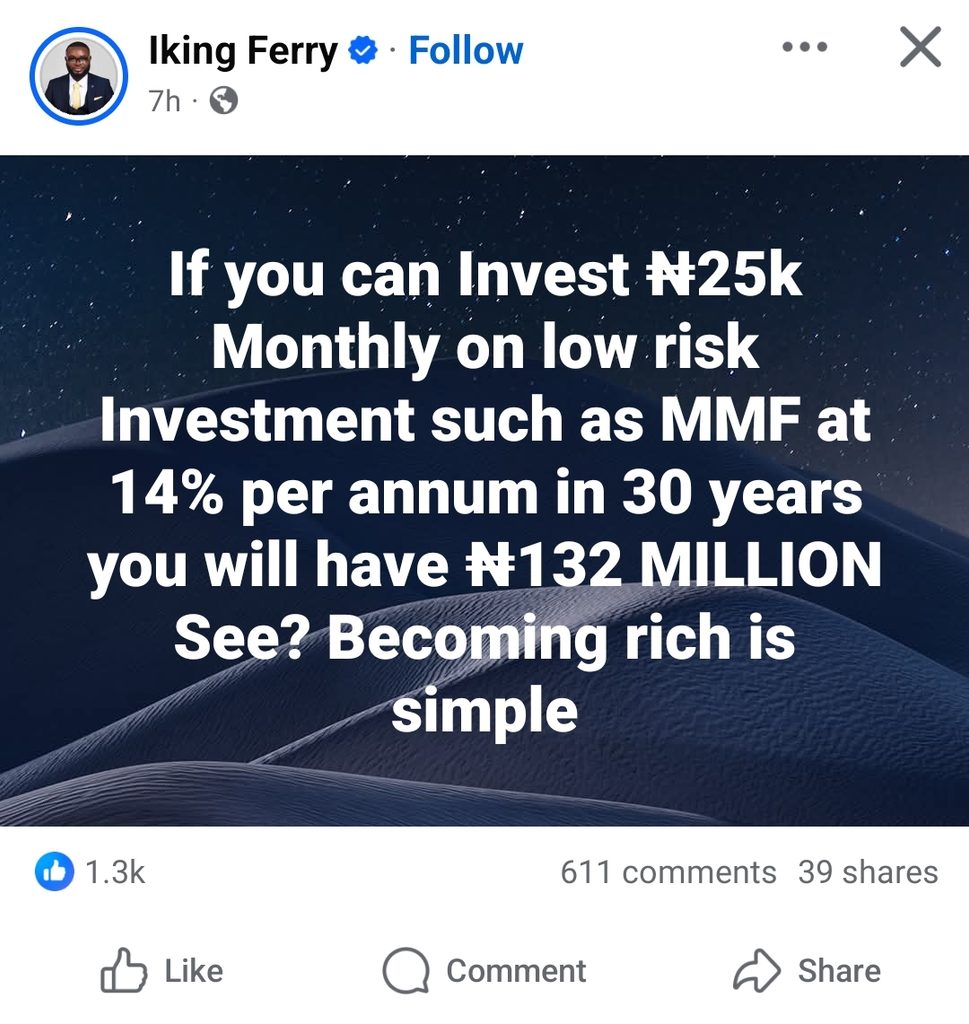
Such statements sound wonderful until the market refuses to cooperate.
A company can be excellent and still be a bad investment at the wrong price. I am sure you know that even a good business, I mean, a very solid business can encounter a bad year. Also, a profitable company can require enormous capital expenditure. What is more? A rapidly growing industry can become overcrowded, and a share that currently looks cheap can become even cheaper.
The name on the building does not abolish risk and will not protect your investment.
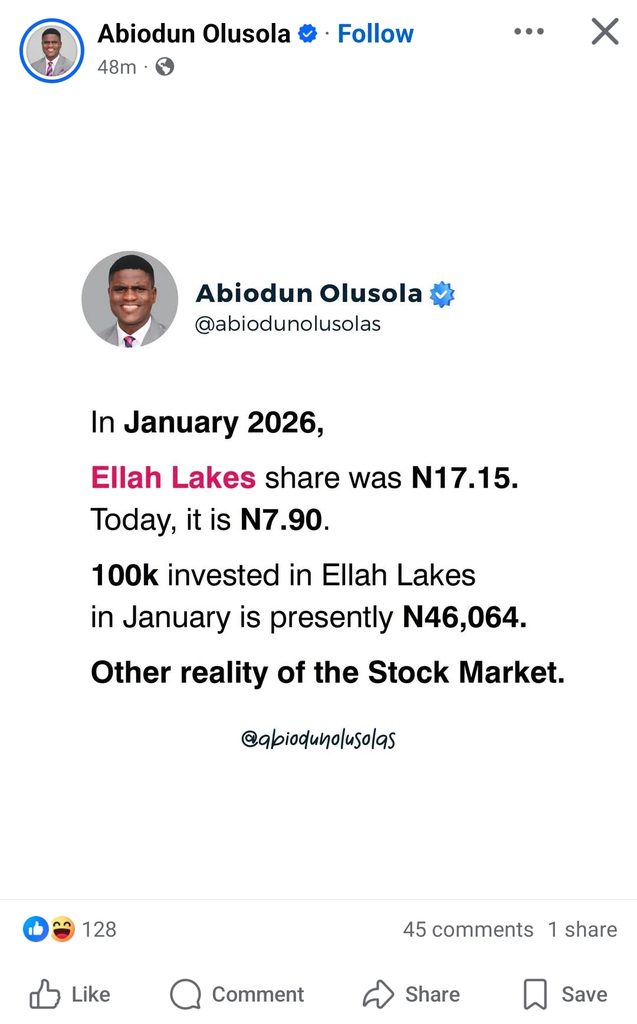
AND THEN THERE IS OIL
The Dangote refinery presents an especially interesting long-term question because it operates in the petroleum industry.
This does not mean that the refinery is destined to fail. Of course, no. What it means is that a serious investor should ask a serious question:
What will the petroleum market look like ten, twenty or thirty years from now?
And the answer is not really obvious.
Why did I raise this question? Fine, consider this.
Electric vehicles are expanding rapidly and the IEA says global electric-car sales exceeded 17 million in 2024 and were expected to surpass 20 million in 2025. Its 2025 oil outlook estimates that electric vehicles alone could displace about 5.4 million barrels of oil demand per day by the end of this decade.
But oil is not used only to move private cars, you may argue. It is used in aviation, petrochemicals, shipping, heavy transport, industrial processes and countless products. That is why saying “electric cars will kill oil” is just as simplistic as saying “oil will always be indispensable.”
The serious question is what happens to demand for refined petroleum products, which is particularly important to a refinery.
And here the numbers become rather interesting.
The IEA’s Oil 2025 outlook forecasts global oil demand rising to approximately 105.5 million barrels per day by the end of this decade before reaching a plateau. More importantly for refiners, it says refined-product demand is expected to peak at around 86.3 million barrels per day in 2027. It also expects the substitution of oil in road transport and power generation to put increasing pressure on demand growth.
That does not mean refineries will suddenly become useless in 2028, it means the industry could gradually move from an era of growing demand into an era in which refiners increasingly compete for a market that is no longer growing at the same rate. And that distinction matters enormously to somebody buying a refinery stock in 2026.
WHAT COULD THE NEXT THIRTY YEARS LOOK LIKE?
To be very honest, nobody knows. But we can examine the major published energy scenarios, and this is where the argument becomes particularly interesting.
The IEA’s World Energy Outlook 2025 presents several possible futures rather than pretending there is one certain answer.
Under its Stated Policies Scenario, oil demand peaks at about 102 million barrels per day around 2030 and then gradually declines. Under its Current Policies Scenario, however, oil demand continues growing and reaches about 113 million barrels per day by 2050, driven partly by demand in emerging and developing economies, petrochemical feedstocks and aviation. The IEA’s more ambitious net-zero pathway produces a much sharper decline.
Then there is OPEC.
OPEC’s World Oil Outlook 2026, released in June 2026, takes a considerably different view. It projects global oil demand reaching approximately 124 million barrels per day by 2050 and argues that continued investment in oil production will be necessary to meet future energy needs.
That is an enormous difference. One major energy institution has a scenario in which oil demand peaks around 2030 and gradually declines. While another major energy institution projects continued growth all the way to 2050.
This is not a minor disagreement. It is precisely the sort of uncertainty a thirty-year investor should take seriously.
The important lesson is not that one organisation is right and the other is wrong. The lesson is that nobody knows the future of oil with certainty.
And if experts studying the global energy system cannot agree on the size of the global oil market three decades from now, an ordinary investor should be very cautious about anybody on social media confidently announcing what one refinery’s shares will be worth in 2056.
The future of petroleum is not a settled scientific fact, it is a matter of technology, economics, government policy, population growth, industrialisation, consumer behaviour, energy security and investment.
It is already obvious how that uncertainty is itself a risk.
THE REFINERY COULD STILL BE THRIVING IN 2056
There is another side to this argument. A decline in global oil demand does not automatically mean the end of every refinery, some refineries will be more competitive than others.
A modern, large-scale refinery with access to crude, ports, storage, pipelines, domestic consumers and export markets may be in a substantially different position from an old, inefficient refinery with high operating costs.
The Dangote facility is not simply a petrol station with a large sign, it is an integrated refining and petrochemical complex with a nominal crude-processing capacity of 700,000 barrels per day. Its business also extends beyond simply producing petrol and diesel. Of course, that matters.
If gasoline demand weakens over several decades, the business does not necessarily disappear overnight. Jet fuel, petrochemicals and other products may remain important. The company may adapt its product mix, markets and operations, it may also benefit from the continued growth of African economies even if demand weakens in some developed markets.
So the intelligent question is not:
“Will oil disappear?”
It is:
“Can this particular company remain profitable as the energy system changes?”
That is a much harder question.
2036, 2046 AND 2056
Imagine three different periods…
By 2036, the refinery could still be operating in a world where petroleum remains an enormous global industry. Electric vehicles could be considerably more common, but aviation, petrochemicals, heavy transport and developing economies could still consume enormous quantities of petroleum. Under the IEA’s stated-policies outlook, oil demand would already have reached its approximate peak and begun a gradual decline.
By 2046, the situation could be considerably different. Electric vehicles may have taken a much larger share of road transport. Renewable electricity and energy storage may have expanded substantially. Some countries may have sharply reduced their dependence on petroleum, while other markets could still have substantial demand, particularly where electrification is more difficult or slower.
By 2056, the uncertainty becomes much greater. Perhaps oil demand will have declined considerably, perhaps petrochemicals and aviation will have preserved a large market, perhaps technological development will have moved far faster than expected, perhaps it will have moved much more slowly, and perhaps geopolitical events, population growth, economic development or energy-security concerns will have changed the picture completely.
Nobody can responsibly promise an investor today that a refinery purchased in 2026 will still be producing extraordinary returns thirty years later, nor can anybody responsibly declare that it will certainly become obsolete. That is the point.
AND THERE IS A SECOND RISK: TOO MUCH REFINING CAPACITY
There is another issue that social-media investment discussions often ignore, a refinery does not make money merely because people use petrol, it makes money from the economics of refining: the cost of crude, the prices received for its products, operating costs, utilisation, logistics, maintenance, financing and the margins available between inputs and outputs. And as always, competition matters.
The IEA has warned that refining capacity additions could outpace the growth in demand for refined products, putting pressure on margins and forcing some higher-cost refineries to close. It has also highlighted the risk that net refinery capacity could substantially exceed refined-product demand later this decade.
This is important because an industry can remain enormous while individual businesses struggle.
For example, air travel can grow while an individual airline fails, food consumption can grow while an individual food manufacturer collapses, banking can remain essential while individual banks fai, and petroleum can remain indispensable while individual refineries lose money.
Therefore, “the world will still use oil” is not sufficient evidence that a particular refinery’s shareholders will make money.
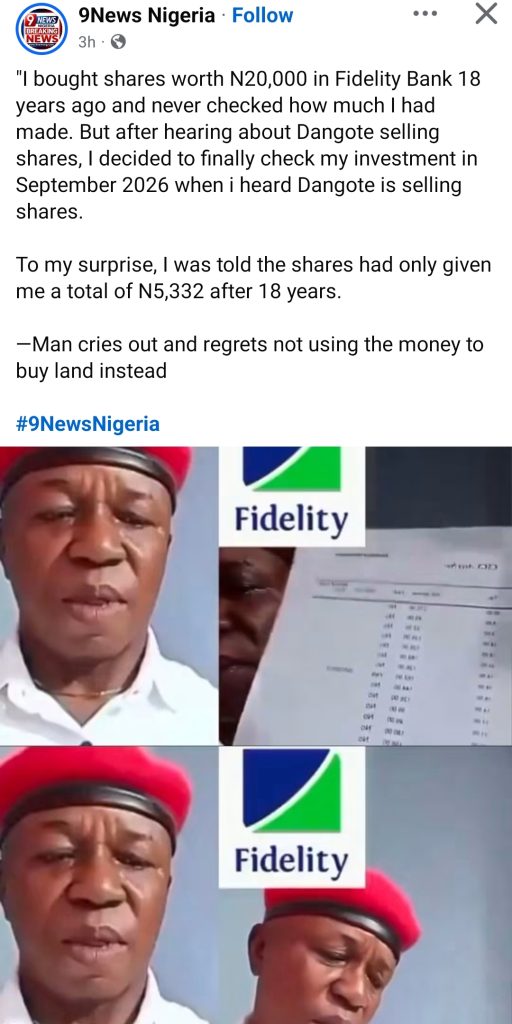
BUT LOOK AT WHAT HAPPENED TO MY OTHER INVESTMENT!
Another common argument comes from people showing spectacular historical returns.
Someone tells us about an investment made around 2015 that has supposedly risen by roughly 1,700 per cent, then tells us with great regret that he sold it in 2017 when it had only risen a little.
The lesson, we are told, is to hold. But there is a missing question:
What exactly was the investment?
A company in banking or financial services does not face exactly the same commercial risks as a petroleum refinery. Neither does a food company, a fashion business, a technology company, neither does an oil refinery.
One cannot take the historical performance of one company in one industry and use it as a measuring stick for an entirely different company in an entirely different industry.
If somebody bought shares in a financial institution fifteen years ago and made an extraordinary return, that does not establish that a petroleum refinery purchased today will produce the same result.
Past performance is evidence about the past, it is not a receipt for the future.
“THE BANK CAN MERGE IF IT IS FAILING”
This brings us to an uncomfortable part of the conversation. Banks have particular regulatory structures, a failing bank may be rescued, acquired, merged, recapitalised or otherwise dealt with by regulators under the laws governing the banking industry.
But a refinery is a different animal. If a large refinery encounters serious financial trouble, there is no universal rule saying that another billionaire will simply appear, buy it and preserve every shareholder’s expected return.
The business can be restructured, its assets can be refinanced, it can seek new capital, its ownership can change, its creditors can enforce their rights, and its shareholders can suffer.
The mere fact that a company is enormous does not eliminate business risk. Indeed, enormous companies can produce enormous losses.
“BUT WHY DIDN’T THE BILLIONAIRES BUY EVERYTHING?”
This is perhaps the most interesting question being asked by ordinary Nigerians.
If the refinery is such a magnificent opportunity, why did wealthy investors not simply buy all the shares before ordinary Nigerians were invited?
The answer is that this question contains a false premise.
They actually did invest.
In July 2026, Dangote Refinery raised approximately $2.5 billion through a private placement, attracting major institutional investors and reportedly receiving subscriptions several times larger than the amount offered.
So the story is not that sophisticated investors looked at Dangote Refinery, shrugged their shoulders and walked away while ordinary Nigerians were handed the opportunity.
The company had already raised significant private capital. The public offer serves another purpose: raising additional capital while broadening ownership and allowing retail investors to participate in the company.
And there is another detail that should sober the small investor. Dangote remains overwhelmingly in control of the refinery, with reports putting his retained ownership at about 87% after the public offer.
The ordinary Nigerian buying ten shares is therefore not becoming Aliko Dangote’s equal business partner, he is becoming a very small shareholder in an enormous company. There is nothing wrong with that, but one should know what one is buying.
NEVER BORROW MONEY TO INVEST?
This statement requires a little care. There are professional investors who use leverage, there are margin facilities, there are sophisticated strategies involving borrowed money, but none of that makes borrowing money to buy shares sensible for a financially vulnerable household.
If your salary barely covers your obligations, borrowing money to buy an asset whose price can fall is an entirely different proposition from investing surplus money that you can afford to leave untouched.
The question should not be:
“How much can I borrow to buy this opportunity?”
It should be:
“How much money can I invest without endangering the things I am already responsible for?”
That is a much more useful question.
INVESTMENT IS A LONG GAME, NOT A RESCUE OPERATION
This is where some of the online investment advice has become dangerous. There is a tendency to speak about investing as though everybody should be investing all the time, regardless of their circumstances, but financial priorities are not identical for everybody.
A young person with stable income, manageable expenses, emergency savings and money left over may reasonably think about long-term investments, but a person with an unstable income, unpaid bills, school fees due next week and rent due next month may have an entirely different financial problem.
Investment cannot compensate indefinitely for inadequate income, and buying a share does not turn a person with a cash-flow problem into a wealthy person, it turns him into a shareholder. Those are two very different things.
WHAT MIGHT ACTUALLY HAPPEN TO YOUR SHARES?
This is where we must stop pretending that anybody can see thirty years into the future.
The fact is that the shares could rise substantially, but they could also fall after listing. They could rise for several years and then suffer a prolonged decline. There is still a chance that they could produce attractive dividends while the market price moves slowly.
They could rise dramatically if earnings, dividends and investor confidence grow, but they could underperform despite the refinery remaining operational if profitability, financing costs, competition or valuation become unfavourable.
The company could also evolve. It could expand refining capacity, it could expand petrochemicals, it could enter new markets, it could acquire other assets, it could alter its product mix, it could face new environmental regulations or stronger international competition, it could benefit from Nigerian industrialisation, or it could be hurt by technological change.
And, as with any company, management decisions made twenty years from now may matter just as much as the decisions being made today.
The person buying ten shares in 2026 is therefore not really making a thirty-year bet on the price of petrol, he is making a long-term bet on the ability of a particular company to remain competitive, profitable and valuable through several technological, economic and political changes. That is a considerably bigger bet.
THE MOST HONEST THIRTY-YEAR FORECAST
If somebody tells you that Dangote shares will be worth a particular amount in 2056, ask him one simple question:
“How do you know?”
If his answer is that Dangote is a billionaire, ask him again.
If he says Nigeria needs petrol, ask him again.
If he shows you what another stock did between 2015 and 2026, ask him again.
If he says oil will never disappear, ask him again.
And if he says electric cars will destroy oil, ask him again.
Why did I say this? Simple! Because all of those statements leave out the actual investment question.
The evidence available today suggests neither an immediate death of petroleum nor a guaranteed thirty-year petroleum boom. The IEA’s scenarios range from oil demand peaking around 2030 and gradually declining to continued growth toward 113 million barrels per day by 2050, while OPEC projects approximately 124 million barrels per day by 2050.
Those are radically different futures. So, the sensible investor does not need to know exactly which one will happen, he needs to understand that either could materially change the economics of a refinery over the next thirty years.
That is simply what risk assessment in any business or investment looks like.
Risk assessment has nothing to do with all the hype, “Buy now because Dangote is involved.”
Also, nobody is saying “Sell everything because electric cars are coming.”
At the same time, I cannot tell you “This will make you rich.”
I can only tell you the uncomfortable truth, and that is:
Nobody knows.
And anyone selling certainty about a thirty-year investment is selling something that the prospectus itself does not promise. Sorry to burst your shiny bubbles.
SO, SHOULD YOU BUY THE DANGOTE IPO?
That is a question each investor must answer for himself or herself. My job is to do the risk assessment for you. This is necessary in any business or investment because they all carry risks, and any good businessperson or investor must first understand the market before diving in.
Most times, you do not lose money because that business is not profitable, you lose money because you do not know what you are doing.
The appropriate question is not whether Dangote is a famous businessman, it is not whether somebody on TikTok says the shares will multiply, it is not whether somebody made 1,700 per cent from another investment, and it is certainly not whether everybody else appears to be buying.
The appropriate questions are much less exciting:
- What am I buying?
- What is the company worth?
- What are its earnings?
- What are its debts and obligations?
- What are its expansion plans?
- What could cause those plans to fail?
- What happens to the industry over the next decade or three?
- What happens if petroleum demand changes faster than expected?
- What happens if refining margins deteriorate?
- What happens if competitors build cheaper or more efficient refineries?
- What return would make the investment worthwhile?
- How long can I leave my money invested?
- What happens if the share price falls by 20%, 40% or more?
And perhaps the most important question of all:
Can I afford to lose this money without damaging my life?
If the answer is no, the problem is not that you have missed an opportunity, you may simply be trying to use a long-term investment to solve a short-term financial problem, and that is how people get themselves into trouble.
WELL… THE OLD RULE STILL WORKS
There is nothing mysterious about investing!
I want you to grab these points from this lecture:
- A share is a piece of a business.
- A bond is a debt instrument.
- A return is compensation for taking risk.
- A dividend is not a salary.
- A rising share price is not guaranteed.
- A famous businessman is not a guarantee.
- A successful company is not immune from failure.
- An enormous industry is not the same thing as an invincible company.
- And an IPO is not MMM.
The Dangote refinery may become a remarkable long-term investment. It may produce excellent returns, it may also disappoint some investors. Its future will depend upon management, costs, competition, regulation, financing, energy markets, refining margins, demand and a great many things nobody can know with certainty today.
Come on, this is no discouragement, that is precisely why it is an investment in the first place. By investing, you are betting on possible future profit… Or loss.
Look! This type of investment is not a lottery ticket, a salary, a rescue plan, and certainly not a get-rich-quick scheme.
Before putting your money into any IPO, read the prospectus, understand the business, understand the risks and use only approved subscription channels. The official Dangote IPO site itself directs investors to approved channels and advises them to read the prospectus before subscribing.
There is nothing wrong with dreaming of wealth, but there is something profoundly dangerous about confusing a dream with a guarantee.
Therefore, what is my advice?
Invest carefully! Invest with money you can afford to commit. And, above all, learn what you are buying before you buy it.